About
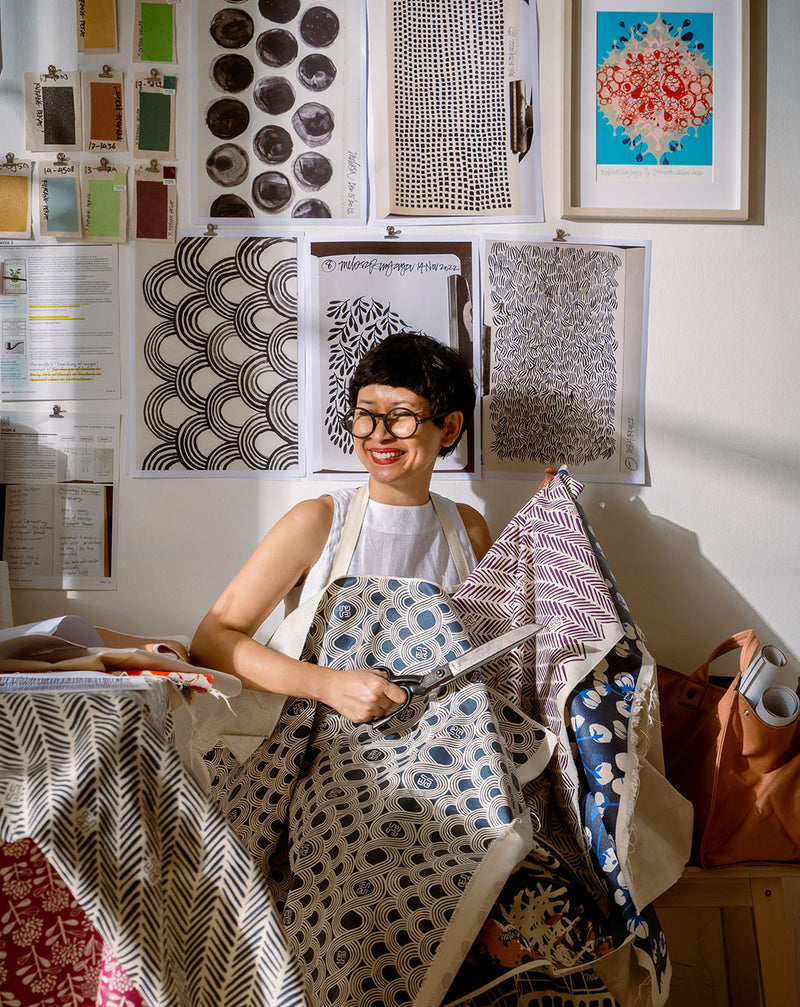
‘Tulisan‘ is a collection of limited edition graphic prints on everyday comfort wear and household accessories. Each illustrated edition draws on distinct visual vocabularies of varying themes and color palettes. ‘Tulisan’ is for everyone who loves fresh prints and exceptional hand made items.
My desires for ‘Tulisan’ is to create a wearable medium for visual impressions. With a passion in typography, lettering and illustrating decorative embellishments, I believe that fluidity, weight and tension in every line stroke are instrumental in creating a memorable impression. The inspiration of most designs are taken from my travels. I am constantly fascinated by details in my surroundings such as the old iron-cast ventilation grills, quirky shapes of botanical specimens, faded colors of vintage stamps or simply fine handwritten scripts on old postcards. I fuse traditional and contemporary elements from varying cultures in my work and may, for instance, mix fresh Scandinavian color palettes on architectural patterns from the Middle East.
I believe that the groundwork of ‘Tulisan’ sprung from my wonderful childhood, which was blessed with a freedom to think and express myself. Born in 1974 and reared in Jakarta, in an ultimately inspiring environment, my family lived in a tiny quaint pavilion attached to a vintage colonial house where my grandmother lived and worked as a passionate dressmaker for the expatriate community since the 1950s. I used to watch her making pillows, quilt covers and hats in a room that filled me with wonder and imagination. My father, on the other hand had a passion for photography and stencil application which took place in a workshop neatly organized where tools where neatly organized in small color coded boxes. Those where my lessons in meticulous grids, patterns and precision. My father taught me many creative skills, the most memorable of which was the skill of making a calligraphy pen out of a simple felt tip pen. Learning this skill at the tender age of six made me feel comfortable in sketching using calligraphy strokes. My mother had always been a home decorator, a perfectionist and a determined entrepreneur. This is the woman who never gives up in life and who always motivates me. She loves to restore unused products and turn them into chic interior sparkles. My mother Didi Hersubeno and I complement each other’s skills and have collaborated in several professional projects. We established ‘Tulisan’ together, and are equally dedicated to deliver excellence in design, production, and customer care.
‘Tulisan’ is my second creative business venture, the first being a multidisciplinary creative studio I founded in 1999 with my husband Dominic Symons in California called Bluelounge Design. We have built a comprehensive repertoire as a product designer and brand strategist for international clients such as Panasonic, Microsoft, Rolls Royce and Trina Turk. In 2004 we began our own product line, creating simple solutions to daily problems with a constant drive to transform even the most everyday items into objects of desire. Today we distribute our Bluelounge products to over 33 countries. The challenges we faced at Bluelounge have equipped me to start this new brand ‘Tulisan’.
‘Tulisan’ is my long term dream to create .hand made in Indonesia. products with an original twist so I want to thank our loyal customer base for your belief in our vision and my entire creative team for your dedications in making our workshop colorful and full of energy.
Warmest regards,
Melissa Sunjaya
——————————–
A Labor of Love
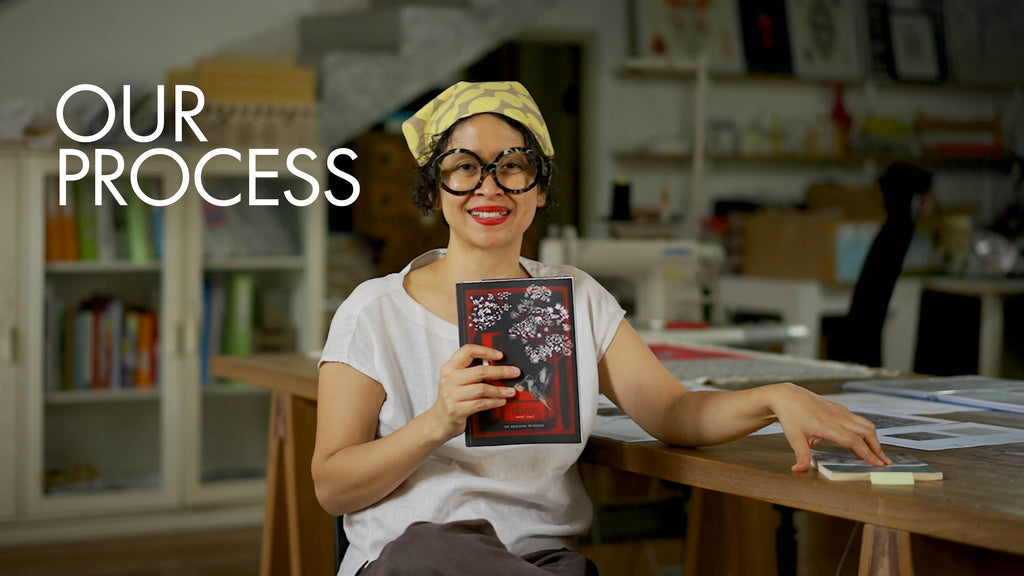
The work I do with my team at Tulisan is all about recording and transferring emotions. Every step is a hand made labor filled with details.
Karya yang saya kerjakan bersama dengan tim di Tulisan adalah sebuah usaha untuk merekam dan menyampaikan emosi. Setiap tahap adalah kreasi tangan yang penuh detail.
Step 1. Scrapbooking
My groundwork starts with collecting words, pieces of fabrics, magazines clippings and other inspirations. This determines a theme or the type of emotions that I try to capture.
Saya memulai proses ini dengan mengumpulkan kata-kata, kain perca, potongan majalah, atau sumber inpirasi lainnya. Tahap ini menentukan tema atau jenis emosi yang ingin saya rekam.
Step 2. Sketching
As I plunge into a chosen theme, I begin to ink the pages of my moleskin. Each sketch is like a fragment of a dream, a wish or a prayer.
Saat menyelam ke dalam sebuah tema, saya mulai menorehkan tinta di halaman moleskin saya. Setiap sketsa menjadi pecahan sebuah mimpi, harapan, atau doa.
Step 3. Writing the story
The pen and ink drawings always unravel a personal tale in my mind, just like a dream. I write this fantasy as a short story to go with every printed edition. Often time, I work with other writers for the story. Those writers who are sensitive, can capture the message purely from looking at the sketches.
Gambaran dengan tinta ini menguakkan sebuah kisah pribadi, seperti sebuah mimpi. Fantasi ini saya tuliskan ke dalam cerita pendek yang akan menemani setiap edisi yang dicetak. Seringkali, saya bekerja sama dengan penulis lain yang dengan kepekaan mereka, mampu menangkap pesan yang ingin saya sampaikan hanya dengan melihat sketsanya.
Step 4. Constructing the signature art
The pieces of sketches are reconstructed to form a final collage which best captures the story. This becomes ‘the signature art’, from which I also created three other derivative visual compositions including: ‘surface study’, ’tile work’, and ’tile work reversed’.
Setiap sketsa disusun membentuk ilustrasi akhir yang mampu menceritakan keseluruhan pesan. Kolase ini menjadi ’signature art’, yang kemudian diuraikan ke dalam tiga komposisi visual dengan bentuk : ‘surface study’, ’tile work’, dan ’tile work reversed’.
Step 5. Selecting and mixing colors
Each color that I selected gives a statement and closely related to the emotions of the story. The paint is individually mixed to make it unique.
Setiap pilihan warna menyatakan sesuatu dan berhubungan erat dengan emosi di dalam cerita. Cat yang dipakai dicampur secara khusus untuk menghasilkan warna yang unik.
Step 6. Creating the screen
First, the screen is overall coated with a photo-sensitive emulsion. The positive film of the final art is laid out on top of this screen as it is exposed to the sun or ultra-violet light. The final screen makes a negative image where the ink can seep through. Sometime it is necessary to retouch the screen with the emulsion to avoid any unwanted holes.
Seluruh permukaan layar kemudian dilapisi larutan yang bersifat ‘photo-sensitive’. Gambar akhir, yang dibuat dalam bentuk film positif, diletakkan di atas layar dan diberi paparan matahari atau sinar ultra violet. Layar akan membentuk gambar dalam format negatif yang menyaring penyerapan tinta. Terkadang proses pelapisan ini perlu poles ulang secara manual untuk mencegah lubang yang tidak diinginkan.
Step 7. Screening the colors
Every color requires a different screen. The water based pigment allows a transparency effect on the multi-layered colors. Plus, this transparency also records all tension, strength and emotion during the screening of colors. Due to the nature of this art, it is completely normal to have an uneven color coverage.
Setiap warna menggunakan layar yang berbeda. Pigmen berbahan dasar air yang digunakan memberi efek transparan kepada lapisan warna. Sifat transparansi ini juga merekam tekanan, kekuatan, dan emosi yang dituangkan selama proses penarikan warna. Di dalam seni ini, sangat wajar jika hasil warna yang didapat tidak merata.
Step 8. Drying
Before going through the next color, the first layer need to be completely dried off. With drying time, it takes about 2 days to complete one color.
Sebelum berlanjut ke warna berikutnya, lapisan pertama harus benar-benar kering. Ditambah dengan waktu pengeringan, proses untuk setiap warna membutuhkan dua hari.
Step 9. Registering additional colors
The next layer of color is applied with the same meticulous process. Since it is hand made, a perfect registration can be very difficult.
Lapisan warna berikutnya dilakukan dengan ketelitian yang sama. Kami melakukan seluruh proses dengan tangan, sehingga kesempurnaan registerasi antara warna menjadi sangat sulit.
Step 10. Pattern making
Once the silk-screened canvas is completely dry, the fabric is cut following a specified pattern for the different products.
Setelah kanvas yang telah dicetak benar-benar kering, bahan kain dipotong mengikuti pola yang telah disesuaikan dengan peruntukkan masing-masing produk.
Step 11. Edition of 36 only
The cut fabric is then sewn and stitched to create the final products: aprons, skirts, tea towels, totes, pouches, etc. Each product style is a limited run of mostly 36 quantity only.
Bahan yang telah dipotong kemudian dijahit membentuk produk akhir: celemek, rok, tea towel, tas, dompet kecil, dll. Setiap jenis produk dibuat terbatas untuk 36 buah.
Step 12. The Traveling Wish
Individually, each product is packaged and accompanied with its own short story. These Tulisan products become a messenger of a dream and wish to others. When these reach another person’s life, they become another art work bearing a new story from their new guardian.
Satu per satu, setiap produk dikemas dengan ditemani cerita pendek. Produk dari Tulisan ini menjadi penyampai sebuah mimpi dan harapan kepada orang lain. Saat produk Tulisan tiba di dalam kehidupan individu lain, mereka menjadi karya seni baru yang membawa kisah baru dari penjaga mereka yang baru.